About the Department
OVERVIEW
The Department of Geography is one of the pioneer departments that started the degree awarding programme in 1985. It is also one of the seven academic departments that form the Faculty of Arts and Social Sciences (FASS) of the Nigerian Defence Academy (NDA). Thus, tremendous growth and development have been recorded by the Department of Geography over the years, especially in the areas of cadet enrolment, teaching, research and publications, general and specialized programmes and laboratory facilities, among others. It has equally excelled in community service. For instance, the Department is a renowned center of excellence for map update and map production nationwide especially for military training and operations. The Department produces maps for various arms and services of the Nigerian Military, as well as sundry maps of Nigeria including street maps of Kaduna. Over the years it has functioned as a pillar in the Academy Consult. The Department is the first to fostered collaboration and partnership with Ministry, and Development Agencies (National Research Space Development Agency; Federal Fire Service and Defence Space Agency) in the Academy.
PHILOSOPHY
The BSc Geography programme in the Nigerian Defence Academy is designed to respond to the needs for research and training in human and physical geography with particular reference to defence and security needs of the Armed Forces of Nigeria in areas of making and updating of maps for military
Training and operations and excellence in military geography. It is also designed to acquaint cadets with knowledge of military geography as both a supplement and reinforcement of what they are taught in the military branch. These are all meant to enhance the knowledge and skills of cadets in the security and development of the country.
ORGANIZATION AND ADMINISTRATION
The Head of Department (HOD) is at the apex of the administrative structure at the departmental level. The HOD assists the Dean in the administration of the Faculty and has overall responsibility in the Department for: research work; teaching and ensuring efficient standards; advice on curriculum development; assisting the Dean in respect of day-to-day discipline of members of staff and cadets; assigning responsibilities to members of staff of the Department and Supervising and coordinating their work: advising on the valuation of qualification and experiences of prospective members of staff for appointment to work in the Department; financial administration of departmental property; serving in standing and ad hoc administrative, policy and planning committees, etc. In Departmental Boards, Departmental Committees, Departmental officers, discussing matters of interest to cadets, staff, the Department, the Faculty and the Academic Branch. In this way, ideas are generated for overall development of the Department and the Faculty.
ORGANIZATION CHART OF THE DEPARTMENT
Apart from the Departmental Boards of Studies and Examiners, which meet regularly, there are standing committees headed by Departmental Coordinator (staff) Officers, Curriculum (CO), Field Course (FCC), Seminar (SO), Time Table (TTO), B.Sc Research Project (RPO), Welfare (WO), Examination Officer (EO), Liaison and Cadets Counseling (LCO), Cadets’ Course Registration (RO), Stores and Equipment (SEO), Departmental Research (DRO), Cadets Counselors (CC), Lobbying Team (LT), Fig. 1 depicts the details, which report regularly on issues of particular concern for discussion at regular departmental meetings. Decisions are taken by consensus and acted upon subject to the limits of the obtaining regulations and resources of the Academy. The table below shows the Chronicle of the Head of Department from 1985-2023.
ADMISSION REQUIREMENTS
In addition to acceptable scores in UTME and passing AFSB , candidates must have obtained five Senior School Certificate (SSC) credit passes which must include Mathematics, English Language and Geography and any two from science or social sciences or both, in not more than two (2) sittings, to be admitted into the programme.
Programmes Offered
ACADEMIC DEGREE PROGRAMMES
- The department prepares cadets for degree in B. Sc Geography
OBJECTIVES OF THE B.SC PROGRAMME
The specific objectives of the bachelor degree programme are:
- Acquisition of Useful Knowledge about: Man’s physical environment- what it consists of, how it changes and how it might be manipulated by man for his own ends. Knowledge acquired here would be useful in the evaluation and management of land and other environmental resources.
- Man’s socio-spatial organization – its element structure and dynamics and how it may be manipulated for the benefits of society. Knowledge gained here would be useful in the allocation of resources within the space economy and spatial organization of society.
- Areal studies – Man’s socio-spatial organization under particular regional settings. Knowledge gained here would enable cadets to analyse our national situation from a global perspective.
- Acquisition of Useful Skills: Cadets here are trained in the acquisition of useful skills, such as literacy, numeracy, graphicacy and articulacy through collection and analysis of environmental and socio-economic data, map compilation and interpretation, etc. These can be put to use in many areas of human endeavour, including military operations and planning, rural land use planning, town planning, census work, transport planning and market research.
- Acquisition of Useful Mental Abilities: Cadets are trained to make reasoned and critical judgments based on deductive and inductive reasoning so as to tackle problems not in isolation but in their total contexts.
- Training in Citizenship and Soldiery: Cadets here are trained to understand and appreciate the environmental and cultural circumstances of other people and to appreciate the interdependence of peoples and places on the earth’s surface.
THE STRUCTURE OF THE BACHELOR'S DEGREE PROGRAMME
The Department of Geography offers a four – year course leading to an award of B.Sc. degree in Geography.
The first-year (100 Level) offers cadets foundation courses in geography as well as electives drawn from the Faculty and the Directorate of General Studies (DGS). The core courses include Introductions to elements of physical and human geography; practical geography; techniques of environmental analysis and local field studies.
The second-year (200 Level) courses aim to present general theories and methods of natural, ecological and spatial systems. The natural and ecological themes are encapsulated in environmental studies while themes in spatial interactions between areas and regions are taught in the study of spatial organization of societies. The practical components of this level emphasise on elementary statistics and cartographic techniques necessary in the capture and presentation of data. Non departmental courses are also offered as electives and general NDA requirements.
In the third-year (300 Level), emphasis is put on the provision of a wide range of approaches to problems which include spatial relationships where each course stresses the use of geographical tools of enquiry and explanation. At this level, cadets are also allowed to offer some elective courses in the Department in addition to borrowed courses from other Departments in the Faculty. The Departmental elective courses are meant to prepare cadets for the branch of geography they may wish to specialize on and undertake their mandatory B.Sc. projects. There is also the field studies component of the degree programme, carried out over a period of one week, somewhere far from NDA grounds. It teaches cadets techniques of data collection and analysis. Field course is usually examined in the field prior to departure back to base.
In the fourth-year (400 Level), emphasis is put on choice, application and specialization in a wide range of geographical areas. A wide range of courses are available at this final stage of cadets’ career at an advance level, all exclusively mounted by the Department. Class work is intensive and involves field and library projects. Ultimately, cadets are expected to submit original essays based on their study of a geographical problem under the supervision of at least a member of the academic staff. This is deemed to be the culmination of a unique experience which started in the first year with an exposure to various methods of observation and measurement of spatial patterns and processes at local and regional scales, through programmes of field work and the study over the years of general principles, specialized theories, methods and techniques.
Cadets at this level participate in Cadets Industrial Work Experience Scheme (CIWES) programme to relevant organisations in Kaduna area. Cadets are also expected to present their researches in series of seminar presentations on chosen areas of research. The culmination of this level of study is the production of and submission of original essays called B.Sc. projects by the cadets based on their study of a geographical problem under the supervision of at least a member of the academic staff.
The Ph.D., M.Sc., (Geography) degrees may be offered in any of the following areas:
- Military Geography
- Climatology/Meteorology
- Population Studies
- Environmental Resource Analysis
- GIS/Remote Sensing
- Urban Geography
- Geomorphology
THE POSTGRADUATE DIPLOMA'S IN THE FOLLOWING AREAS
- Environmental Management
- Remote Sensing and Geographic Information System
PROFESSIONAL PROGRAMMES
MEM: Master in Environmental Management
MGIS: Master in Geographic Information System
Department Staff
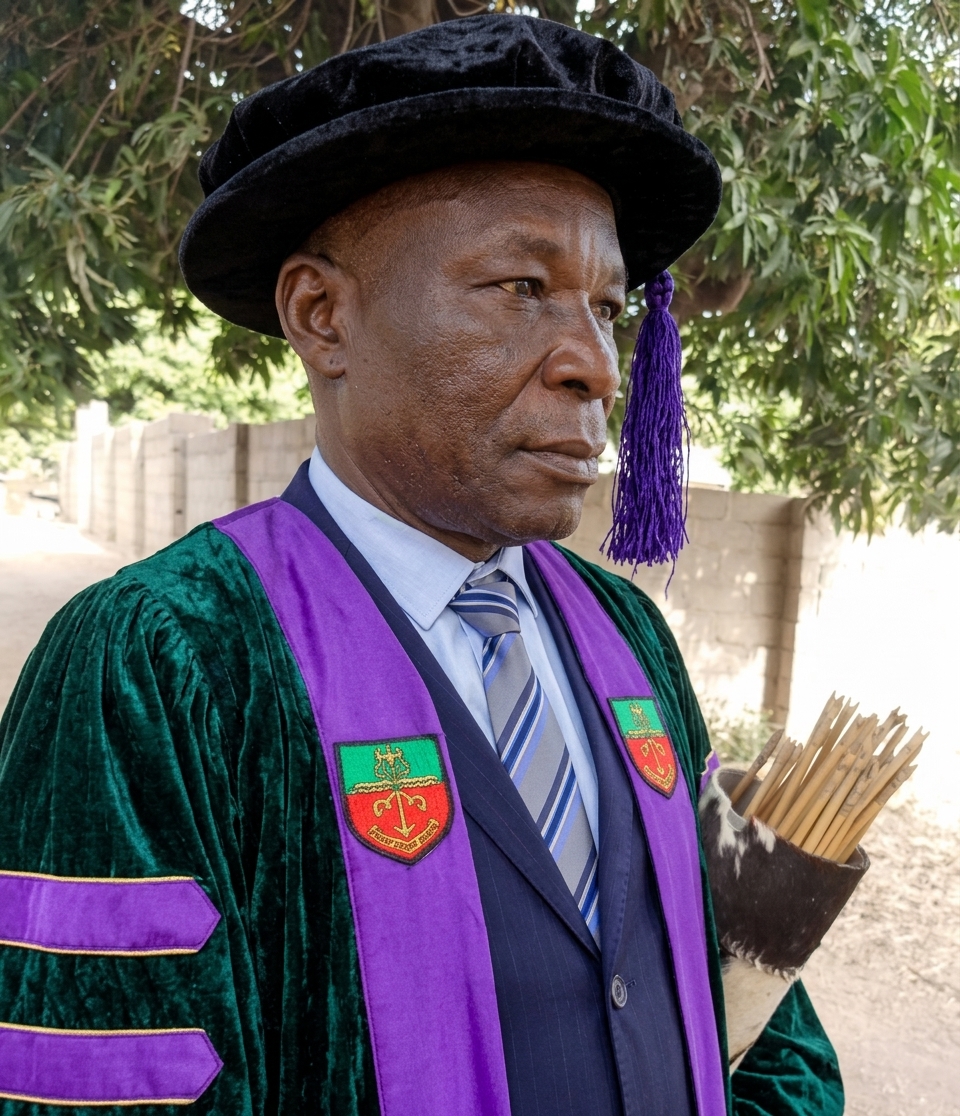
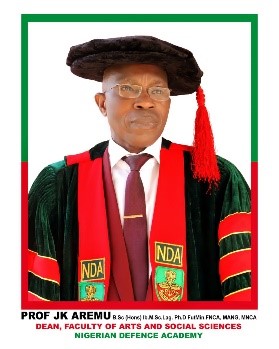
Prof James Kayode Aremu
Professor
Meteorology, Climatology, Environmental Geography, Weather and Climate Studies
View Profile
Prof Adewuyi Taiye Oluwafemi
Professor
Remote Sensing, GIS and Environmental Resources Management
View Profile
Prof Aliyu Dadan-Garba
Professor
Hydrology, Water Resource ManagementEnvironmental Management Resource PlanningEnvironmental Impact Assessment Environmental Pollution Disaster and Risk Management
View Profile

Prof Olumide Akinwumi Oluwole
Professor
Urban Geography/ Transport Geography / Geographic Information System and Remote Sensing
View Profile
Dr Ganiyu Onoruoiza Salawu
Associate Professor
Geomorphology / Soil Geography / Remote Sensing & GIS
View Profile
Dr Jise Danjuma Danladi
Senior Lecturer
A Development Geography major and Conflict and minor field is Conflict and Peace Studies with research interest in Critical Geopolitics, Ocean Governance and the Blue Economy in the Gulf of Guinea.
View Profile
Dr Sylvanus Helda Bernard
Lecturer I
Cartography, Remote Sensing, and Geographic Information Systems (GIS)
View Profile
Lt Col/ Dr Ishaya Kuku Yahaya
Lecturer I
Environmental Resources Planning, Vegetation Studies, Terrain Evaluation and Military Geography
View Profile
Dr Fatai Afeez Olansile
Lecturer II
Dr Fatai's areas of specializations are urban and development studies, urban planning, urban governance, urban resilience, spatial sexuality and academic governance.
View Profile
Mr Isah Shuaib
Assistant Lecturer
Mr Isah's areas of specializations are environmental management, infrastructural planning, peri-urban management, urban food security among others.
View Profile

Mr Abubakar Jabir
Graduate Assistant
Military Mapping Environmental Management Soil and Environmental Assessment
View Profile
Mr Dogara Iyal Bashir
Graduate Assistant
Remote Sensing and Geographic Information Systems (GIS) and the application of advanced geospatial technologies to environmental management and sustainable development.
View ProfileDepartment Info
- Academic Staff
- 16
Parent Faculty